Growing pains and perils of AI chatbots
What my childhood favorite manga, Marvelous Melmo, teaches us today
On this Labor Day, many prominent AI tech leaders have confessed that the “short-term” disruptive effects of generative AI on human labor are unavoidable. They have admitted that little can be done to prevent them. Some went on to say that a lot of people would lose jobs and basic income programs may need to be introduced. Are they telling the average worker to subsidize the economic consequences of their social experiments?
Recently, there have been lawsuits against ChatGPT, OpenAI, and Character AI by families of deceased teens. Several wrongful death lawsuits are unfolding in the U.S. and Canada. Reports suggest that AI-powered social chatbot companions lure and validate young minds into dangerous and self-destructive thoughts and behaviors.
Research communities recently started warning about downright foreseeable effects on users’ mental health. Will we see a new DSM-5 diagnostic code for mental disorders: AI-psychosis?
Concerns have also been expressed about Meta's AI policy, which permits sexualized chats between minors and AI bots. Many young people will be deprived of healthy and normal psychological, social, emotional and neurological development due to AI chatbots.
AI companies currently place a disproportionate and uncalculated risk on their technologies’ impacts on minors with few restrictions to mitigate harm. The tech landscape messaging often preaches that their users ought to “take calculated risks,” but doesn’t consider the rabbit hole of their generative AI technology.
A student may unsuspectingly start using ChatGPT for homework and end up forming psychologically unhealthy attachment to their bots.
It is likely that tech leaders will next admit that little can be done to prevent psychological harm to minors. Whose responsibility is it to teach young people about what may happen if they start developing a relationship with AI chatbots?
This week, I reflected on life-lessons that I gained from my childhood favorite manga Marvelous Melmo. Its far-reaching themes include trials, challenges and lessons from typical life events and transformation through connection.
Lessons from Marvelous Melmo
In 1970, Osamu Tezuka’s manga Marvelous Melmo (Mamaa-chan) first appeared in Shōgaku Ichinensei, a monthly educational magazine for Grade 1 in Japan. It later became a popular TV series.
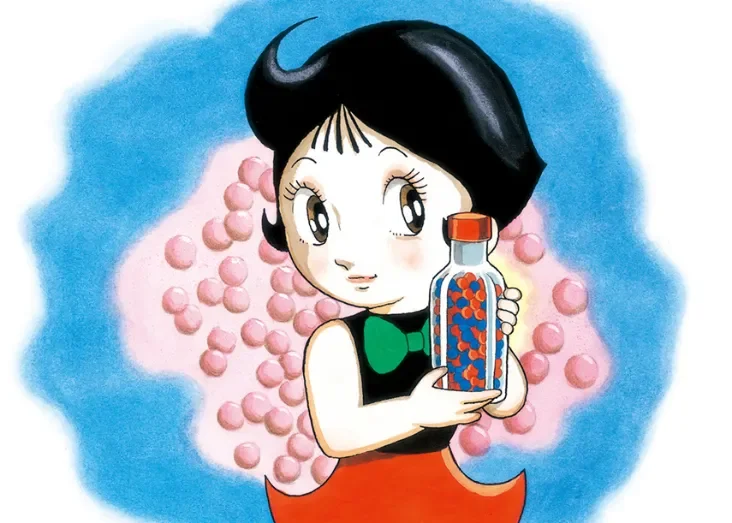
Melmo is a 9-year-old girl with two younger brothers. When her mother dies in a car accident, Melmo is thrust into new roles and feels wild new emotions she has never experienced before.
In heaven, Melmo’s mother is granted one wish. She wishes for Melmo to be allowed to grow up more quickly so that she can take care of her younger siblings.
One day the mother visits Melmo as a ghost and gives her miracle candies from God that let her shift freely between childhood and adulthood (note: Tezuka was not religious). A red candy makes her 10 years younger, and a blue one makes her 10 years older. When Melmo instantly ages from 9 to 19, she turns from a 9-year-old version of herself in 9-year-old sized clothes, to a 19-year-old woman whose clothes are too small.
While Melmo changes from 9 to 19 physically, she has to learn about the emotions and maturity required of a 19-year-old.
Significantly, Melmo transforms grief into agency and responsibility, instantly-gained power into humility, innocence into empathy, and then returns to being 9 years old in body and in spirit.
What I learned from Marvelous Melmo in elementary school still resonates with me today. Melmo’s metamorphoses in each episode mirrors frequent innate human desires to be someone or somewhere else and to skip the normal stages of emotional growth.
The candies give Melmo power, but that power is an illusion, and in the end she is still who she always was.
From her sudden agency, confrontation with loss and evil and her return to innocence, Melmo’s lessons offer vivid parallels to our own evolving bonds with AI technology in 2025.
Just like Melmo’s candies, our experiences with generative AI are illusions. Generative AI no more has real wisdom than Melmo’s candy.
AI social companions prompt us to rethink the true meaning of human growth. AI chatbots do not have the agency and wisdom to appreciate the depth and warmth of the ways in which humans have learned and experienced wisdom over the millennia.
Thank you for reading! See you next week.
