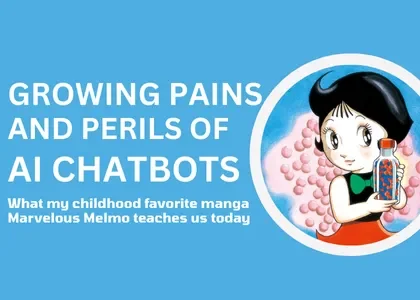
Growing pains and perils of AI chatbots
This week, I reflected on life-lessons that I gained from my childhood favorite manga Marvelous Melmo. Its far-reaching themes include trials, challenges and lessons from typical life events and transformation through connection.
Lessons from Marvelous Melmo
In 1970, Osamu Tezuka’s manga Marvelous Melmo (Mamaa-chan) first appeared in Shōgaku Ichinensei, a monthly educational magazine for Grade 1 in Japan. It later became a popular TV series.
A final portrait of a kamikaze pilot
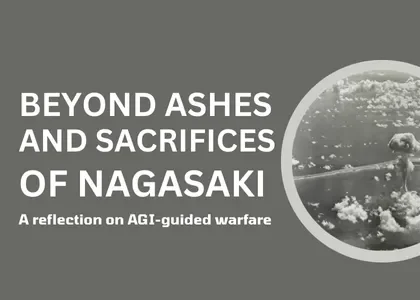
August 9th marks the 80th anniversary of the atomic bomb code-named Fat Man dropped on Nagasaki. Recounting my own family ties to Nagasaki and its sacrifices and rebirths from the ashes, I argue that nuclear technology steered by AI—especially artificial general intelligence (AGI)—threatens to render sacrifice unrecognizable, driving decisions beyond empathy and beyond mourning.
----- Reprint with permission. Originally published by AI and Faith.
Ethics of Sorting at Concentration Camps and AI
“We are entering the Auschwitz death camp,” explained the Polish tour guide. The infamous iron gate to Auschwitz stretched before us. “People did not arrive here to work. They were brought to be killed in forced labor, torture, and execution.”
Arbeit was one of the first German words that I learned in my freshman year in college. Over the last four decades, my German vocabulary has been reduced to only a few words. Somehow, the word arbeit stayed with me, a product of my introductory German textbook and the days with a Germany study club.
Migrant workers gastarbeiter were brought to post-WWII Germany to help with the reconstruction of the country. Arbeiter means worker. Today, we use the word worker frequently without negative connotations. However, this seemingly neutral word once carried the coded implications of forced labor, torture, and extinction.

Courtroom 600, The Nuremberg Code, and Christianity
The poster in front of me said, “Jews are lice: they cause typhus.”
I was in my early twenties reviewing Nazi health propaganda as part of my participation in a student-led German history study group in Tokyo.
There to examine how Germany’s fragile democratic experiment in the Weimar era gave way to Nazi authoritarianism, I was struck by the way that public health messages and neighborhood watch slogans often carried ideological nudging content.

Welcome to Momento
Hello! I’m Yuriko—a bioethicist and gerontologist, writer, and curious wanderer of the quiet ethics tucked into everyday life.
Momento is where I gather threads from the past and present in hopes that they spark reflection or connection.
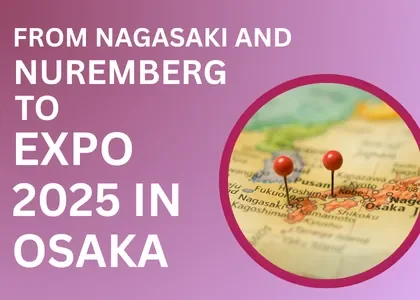
From Nagasaki and Nuremberg to Osaka
This month, we will reflect on sites marked by conflict and remembrance—Hiroshima and Nagasaki, Nuremberg, Auschwitz, and the World War I trenches.
These places are more than historical landmarks to me. They are emotional landscapes transcending facts and figures that I’ve encountered through travel, museum visits and lived experience.
My essays this month examine how conflict scars the human body, burdens the conscience, and tests our shared humanity—and how technology sits at the heart of these intersections.